MESSAGES FROM THE BISHOP'S OFFICE
- BISHOP CROSBY & AUXILIARY BISHOP LOBSINGER -
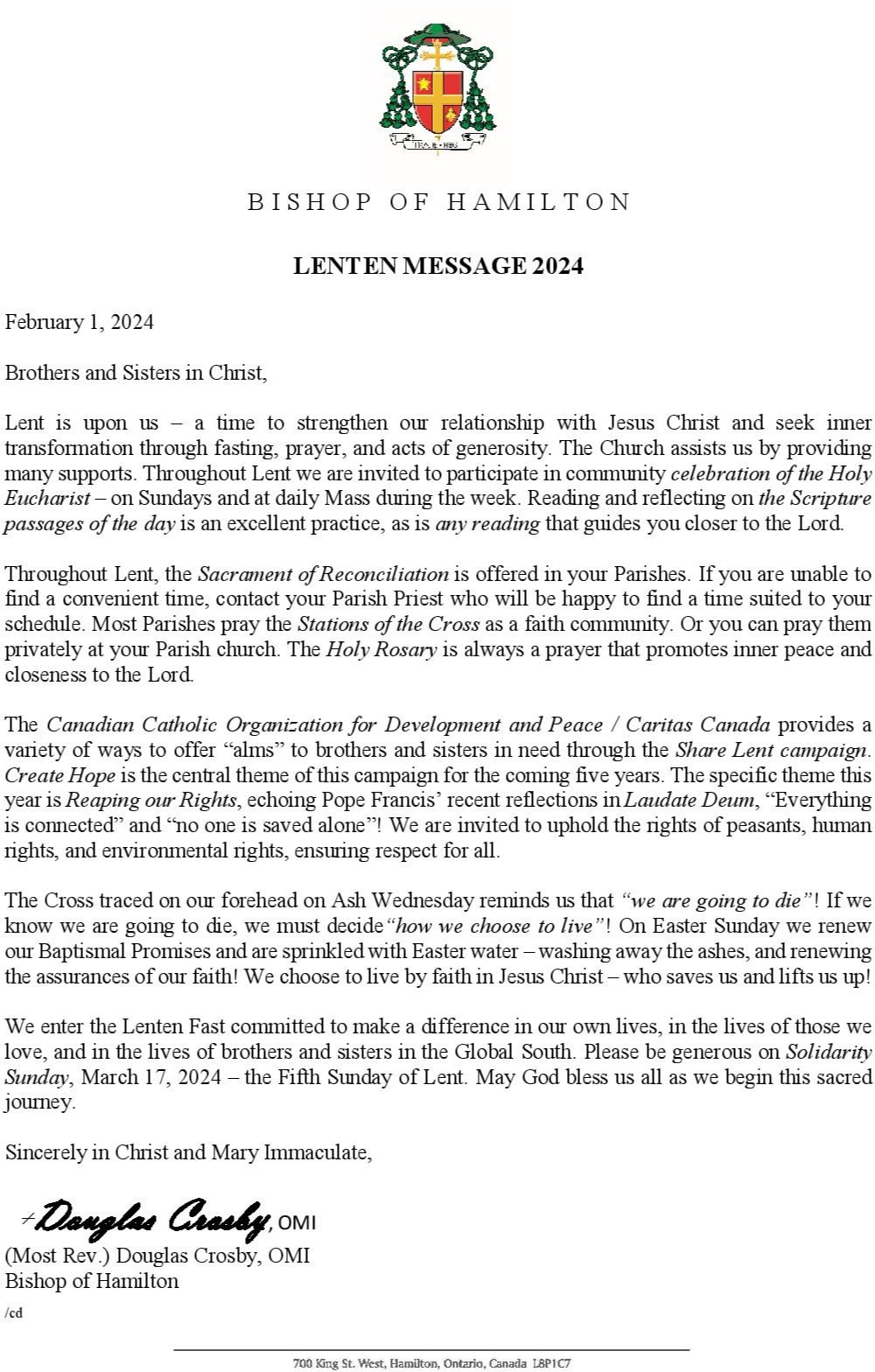
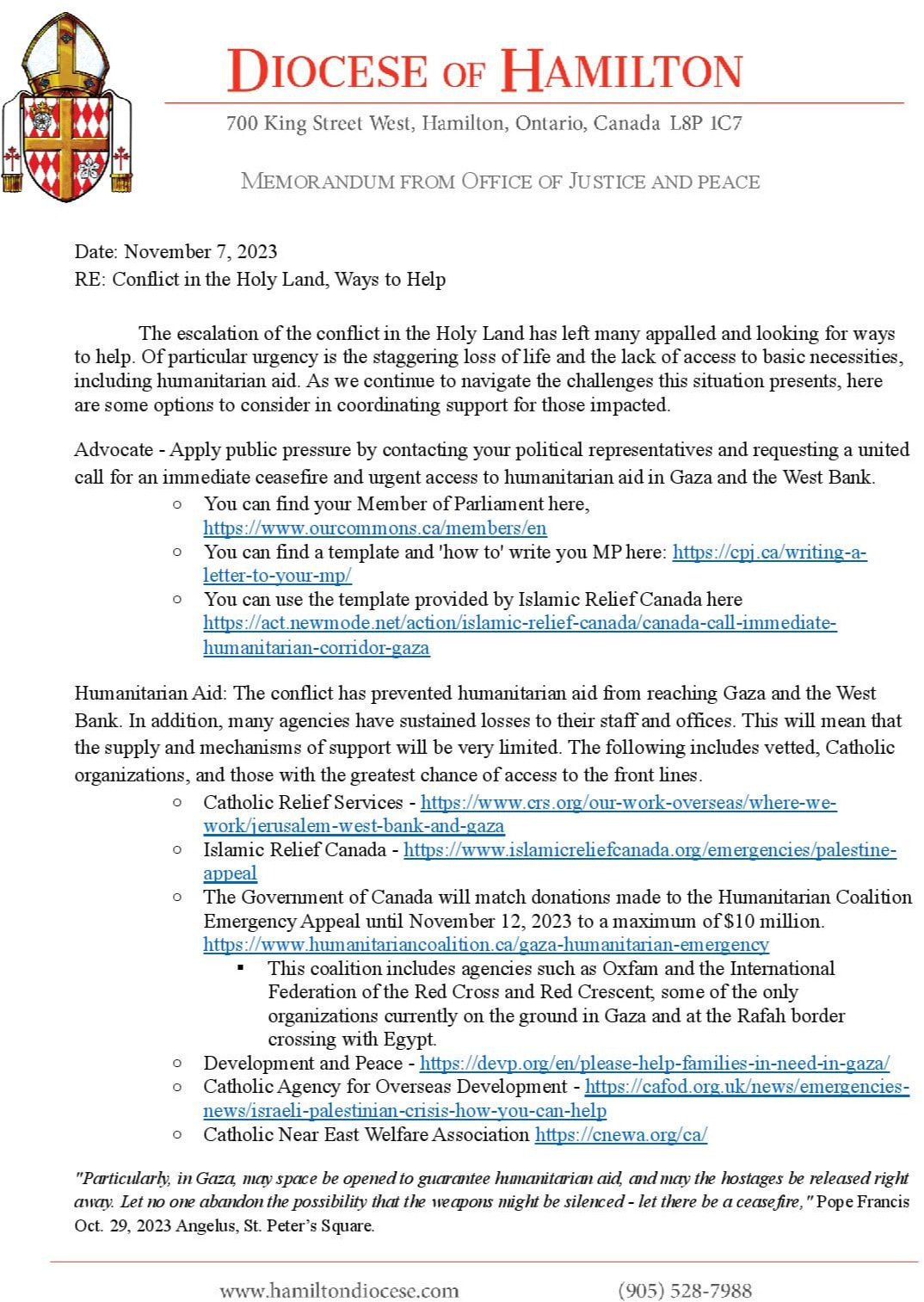
conflict in the holy land, ways to help
LIVING AS CATHOLICS IN THE PUBLIC SQUARE:
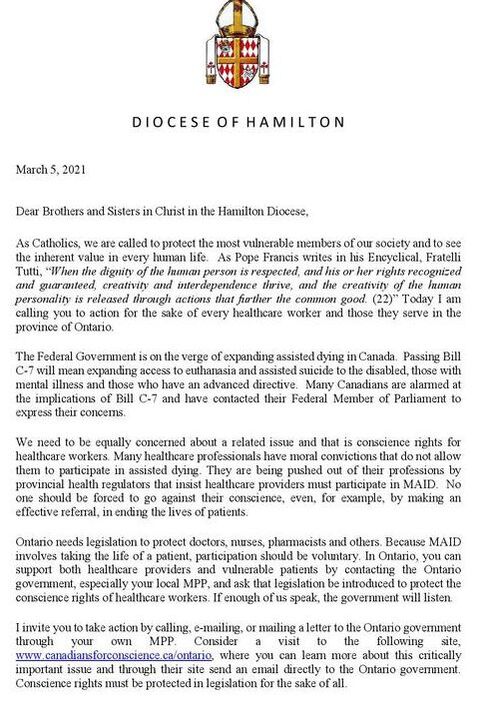
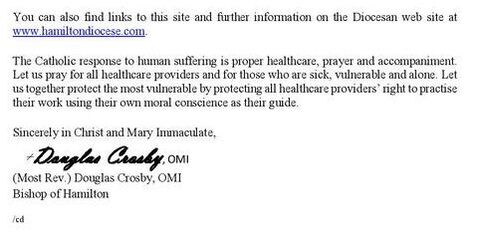
FREEDOM OF RELIGION AND CONSCIENCE IN CANADA

| CCCB - Living as Catholics |
From the Canadian Conference of Catholic Bishop's website
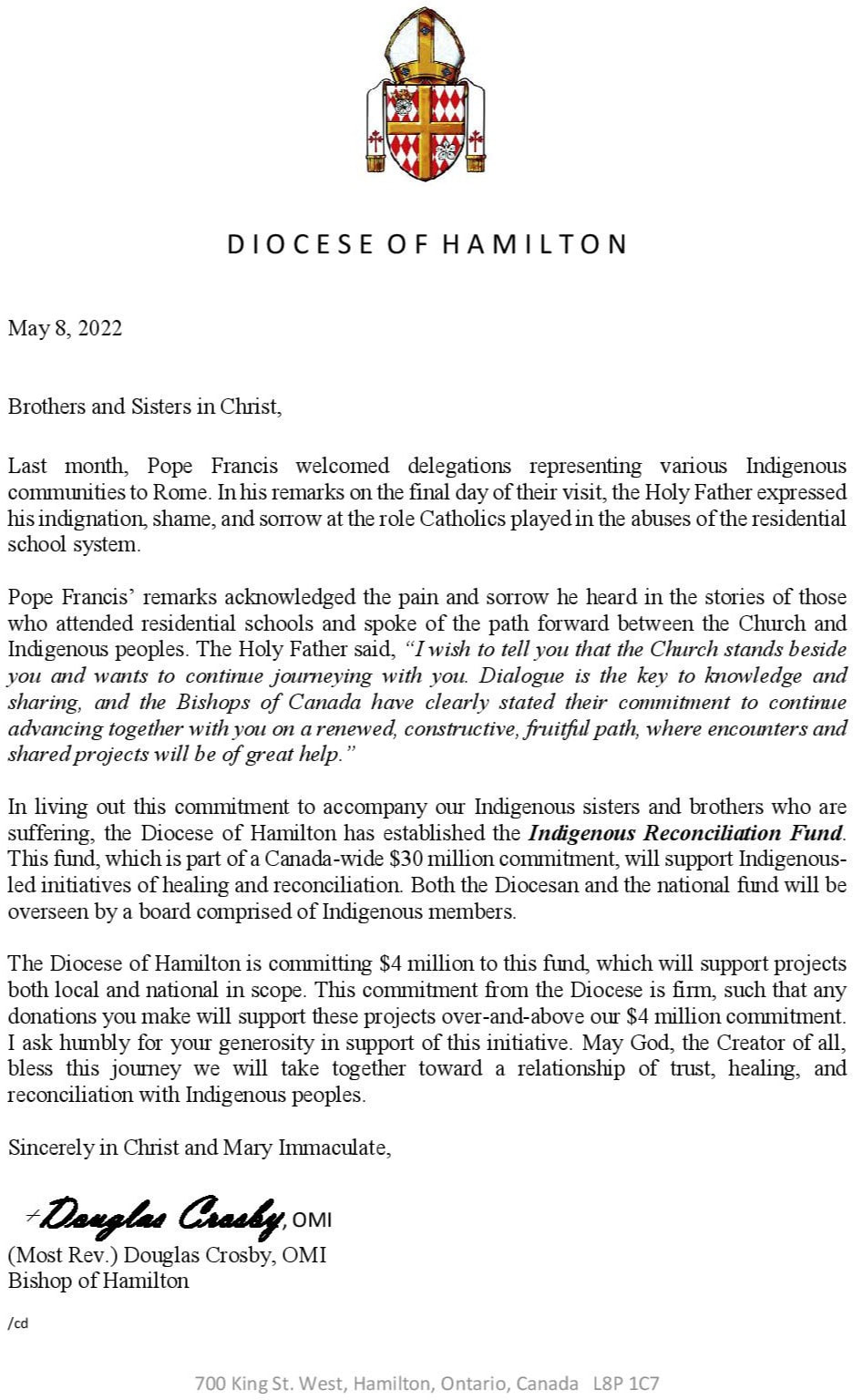
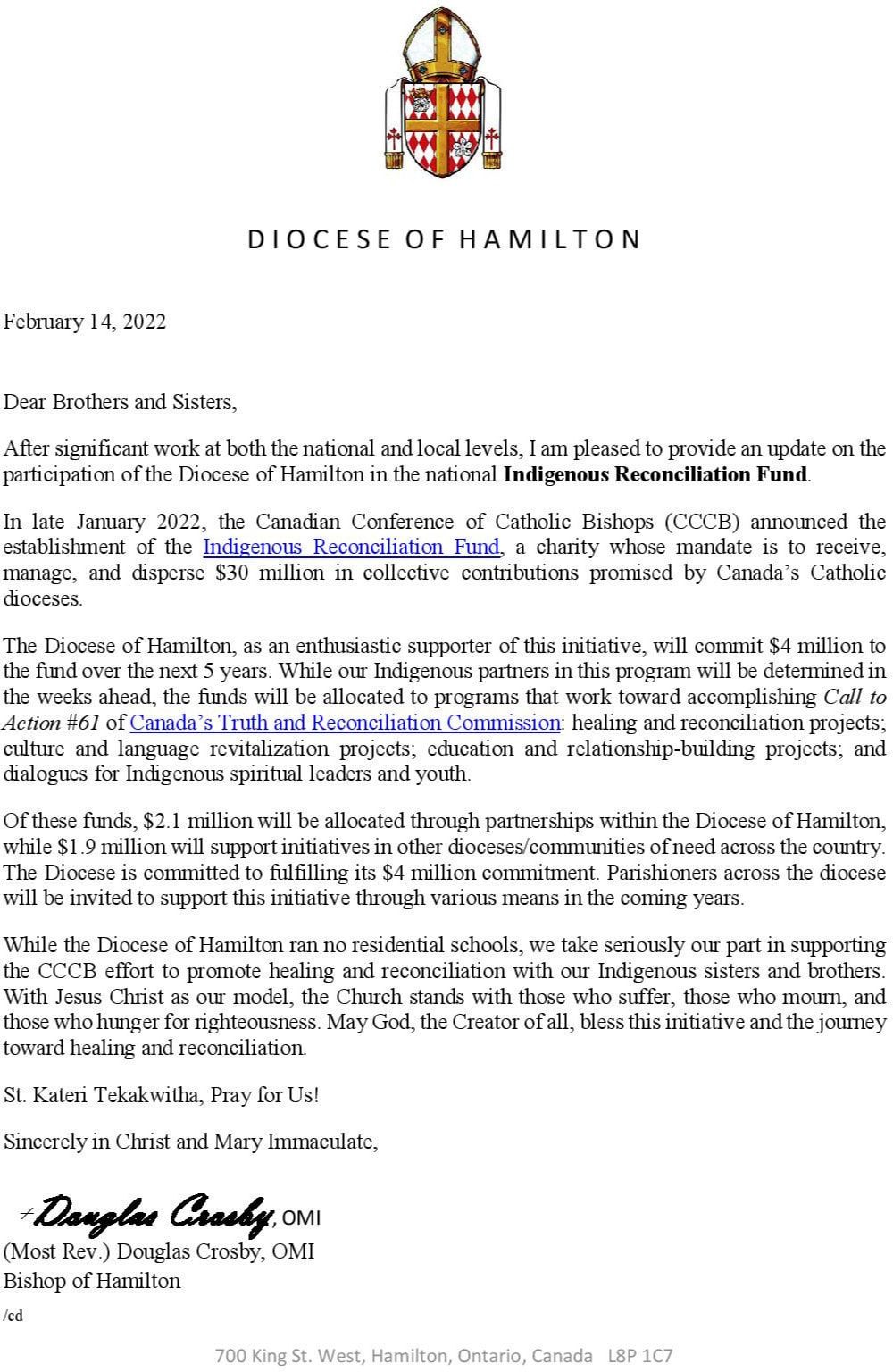
Indigenous reconciliation fund
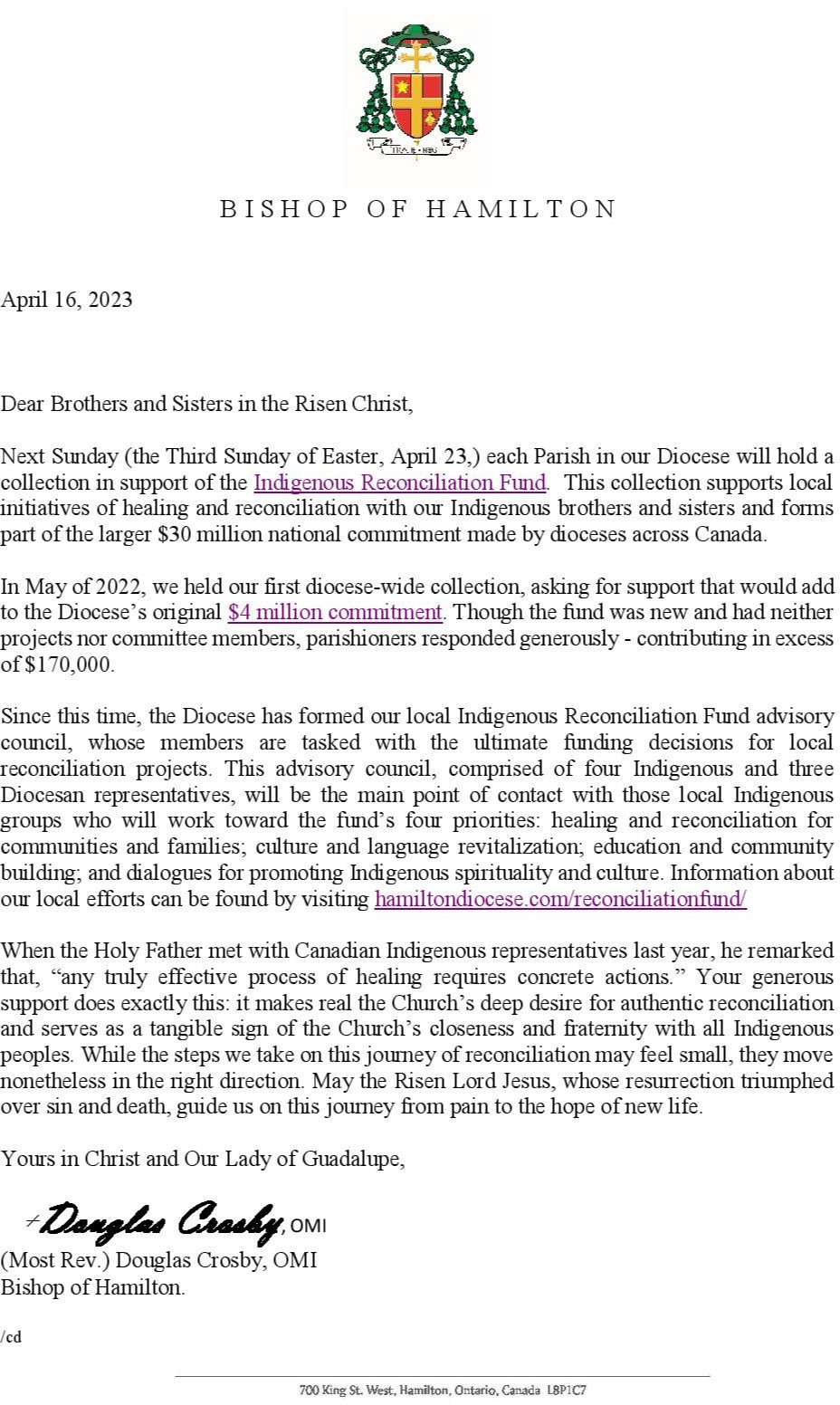
| Indigenous Reconciliation Fund Collection April 2023 |
Pastoral Letters to the Indigenous Peoples of Canada
from the Canadian Conference of Catholic Bishops
The Canadian Conference of Catholic Bishops (CCCB) released a series of Pastoral Letters to First Nations, Inuit, Métis, and the People of God in Canada, to affirm its ongoing commitment to renewing and strengthening relations with Indigenous Peoples at the national, regional, and local levels.
Each of the distinct Pastoral Letters in this series titled, That We May Walk Together, is the fruit of many months of listening, dialogue, and encounter with Indigenous Peoples, especially through Listening Circles held in dioceses across the country, the Indigenous Delegation to the Vatican in April 2022, and Pope Francis’ Apostolic Voyage to Canada in July of the same year.
You may access the PDF files on the CCCB website, in English and in French, by clicking the following links
https://www.cccb.ca/indigenous-peoples/that-we-may-walk-together-series-of-pastoral-letters-2023/
For additional context, please refer to the announcement on the CCCB website:
https://www.cccb.ca/announcement/cccb-invites-indigenous-peoples-to-continue-walking-together-on-the-journey-of-truth-justice-healing-reconciliation-and-hope/
Each of the distinct Pastoral Letters in this series titled, That We May Walk Together, is the fruit of many months of listening, dialogue, and encounter with Indigenous Peoples, especially through Listening Circles held in dioceses across the country, the Indigenous Delegation to the Vatican in April 2022, and Pope Francis’ Apostolic Voyage to Canada in July of the same year.
You may access the PDF files on the CCCB website, in English and in French, by clicking the following links
https://www.cccb.ca/indigenous-peoples/that-we-may-walk-together-series-of-pastoral-letters-2023/
For additional context, please refer to the announcement on the CCCB website:
https://www.cccb.ca/announcement/cccb-invites-indigenous-peoples-to-continue-walking-together-on-the-journey-of-truth-justice-healing-reconciliation-and-hope/
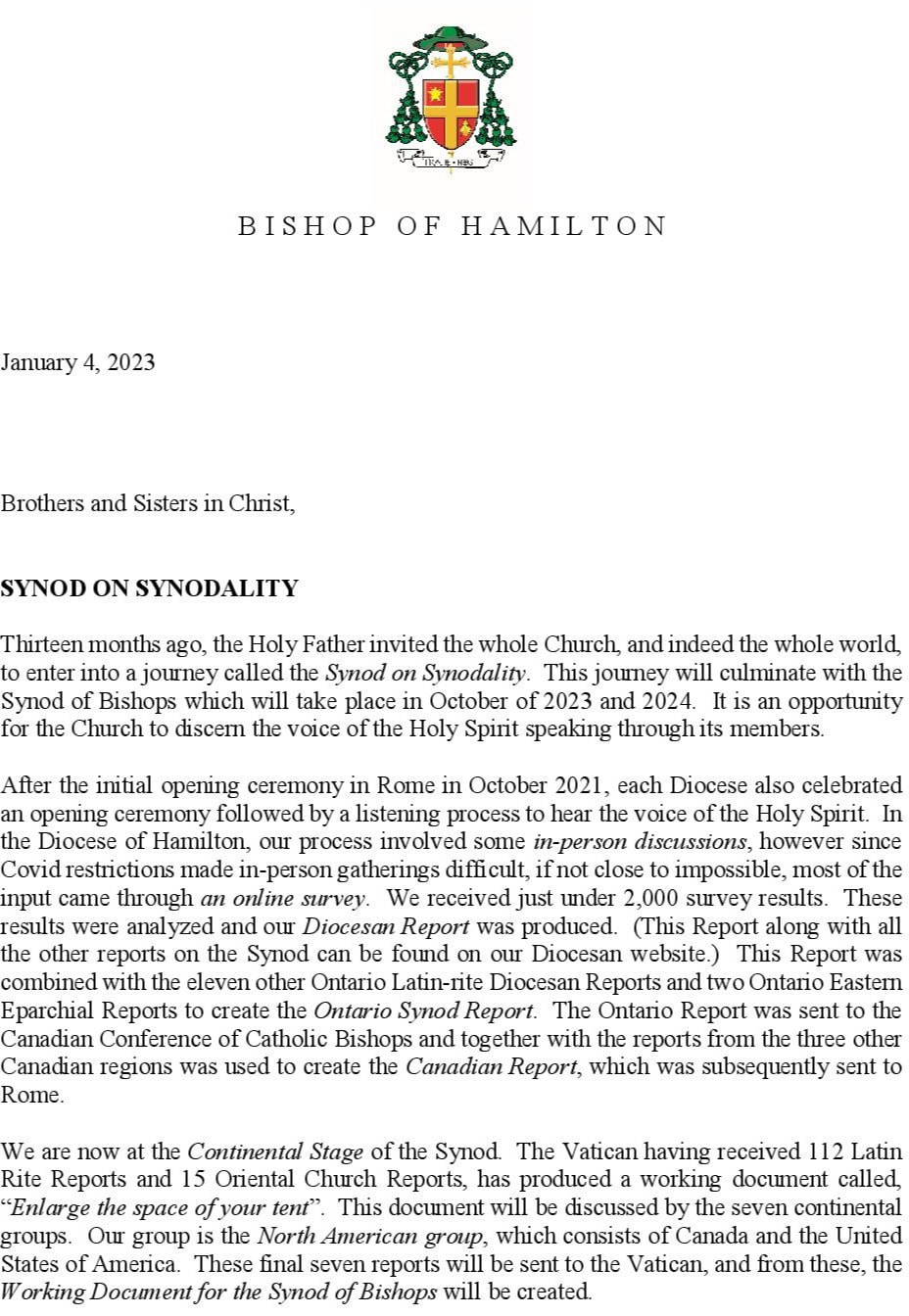
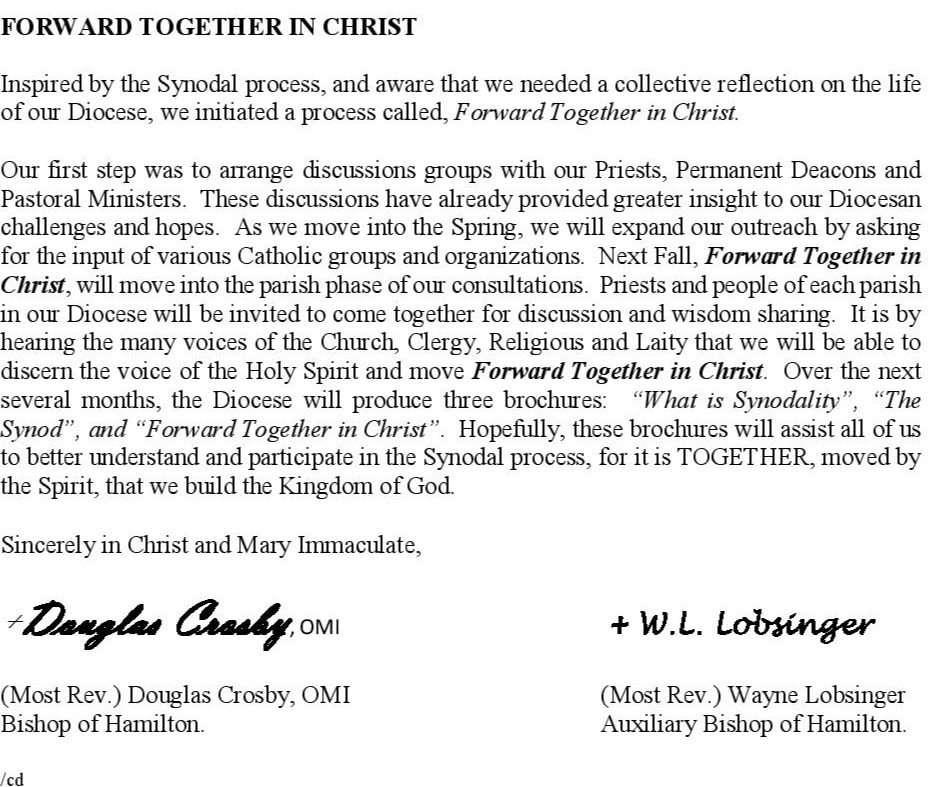
Synod, forward together in christ
| Frequently Asked Questions - IRF |
| Pastoral Letter Re Indigenous Reconciliation Fund |
COVID VACCINES
The official position of the Catholic Church is that all available COVID vaccines are ethical and all Catholics who are able are encouraged to receive the vaccine. Bishop Douglas Crosby, OMI, encourages every member of the Catholic Church within our Diocese of Hamilton to be fully vaccinated.
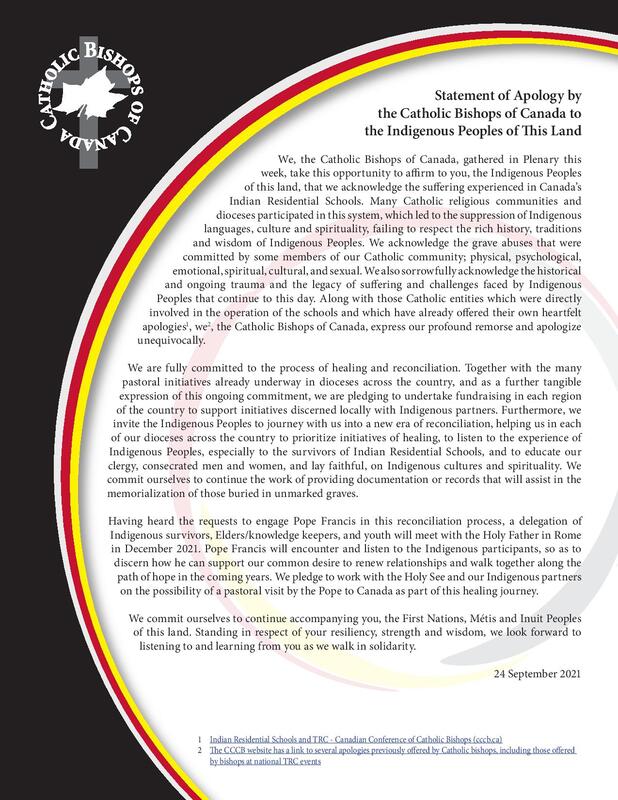
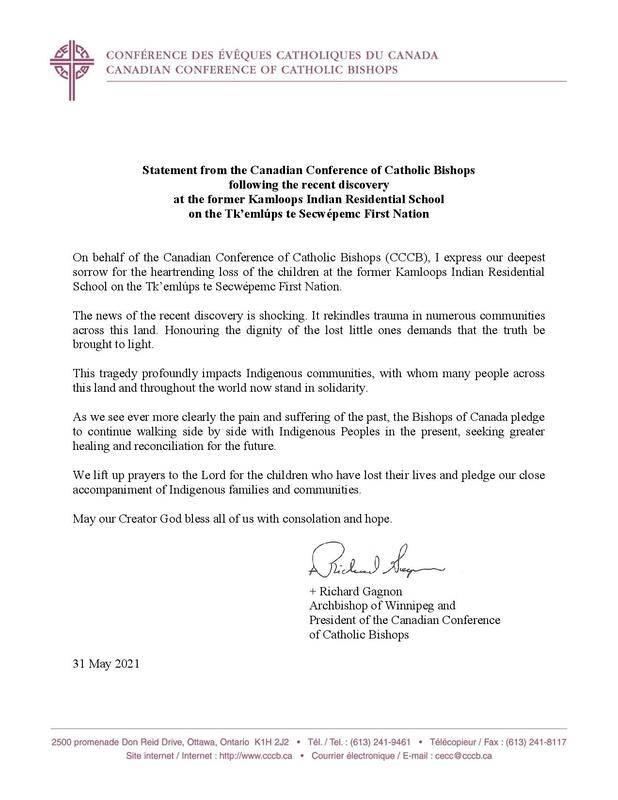
| Statement of Apology by the Catholic Bishopes of Canada to the Indigenous People |
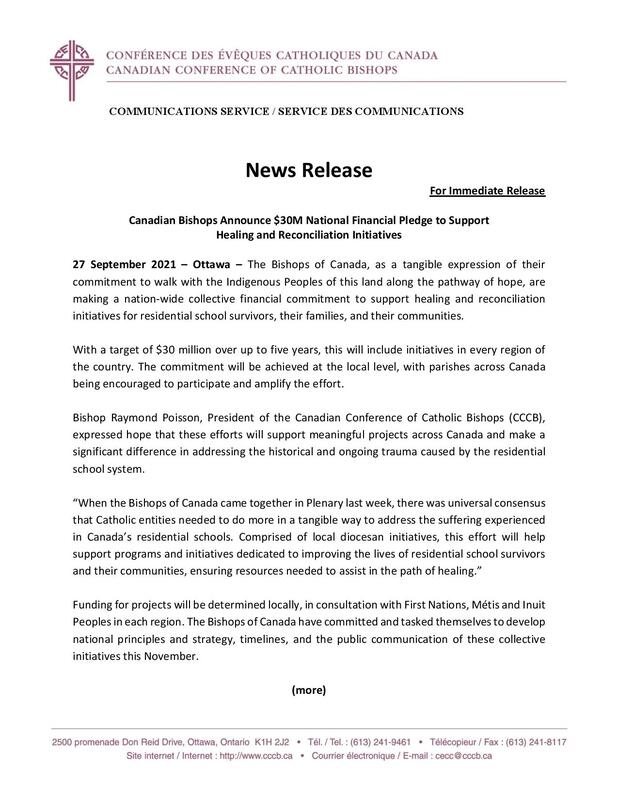
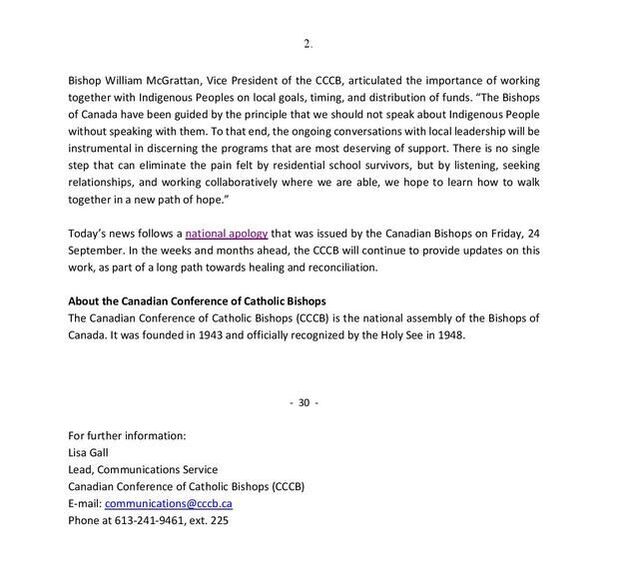
to inform, to encourage, to heal
For further information, please visit: https://hamiltondiocese.com/residential-schools/
Updates will continue to be posted to this website.
Updates will continue to be posted to this website.
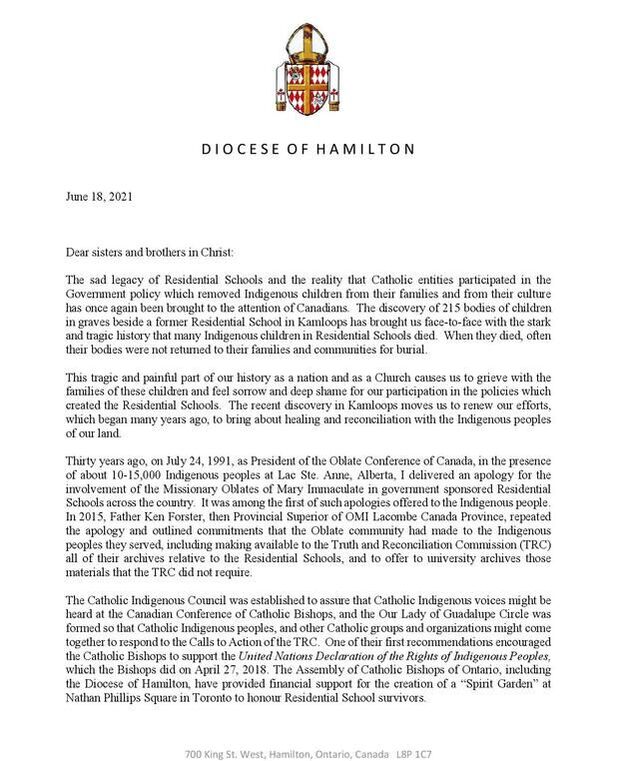
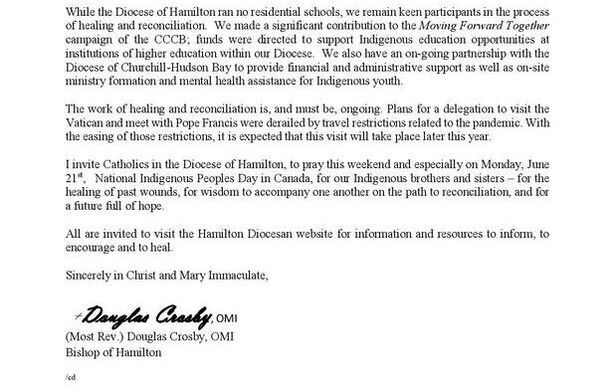
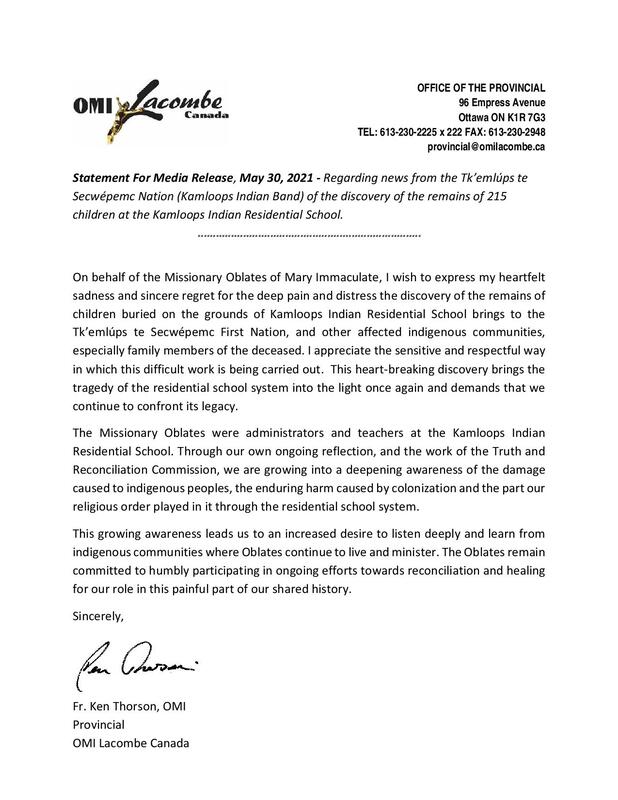
| Letter from Bishop Crosby - To Inform, To Encourage, To Heal |
For more information, visit: https://hamiltondiocese.com/residential-schools/
THE CALL FOR THE CATHOLIC CHURCH TO APOLOGIZE...
THE CALL FOR THE CATHOLIC CHURCH TO “APOLOGIZE” for our involvement in government sponsored Indigenous Residential Schools is loud and clear. The apologies actually began 30 years ago, when the Missionary Oblates of Mary Immaculate offered an apology at the annual Lac Ste. Anne (Alberta) pilgrimage – a long-time sacred pilgrimage site for thousands of Indigenous Peoples from North America. The Oblates were marking their 150th anniversary of presence and ministry in Canada, and chose to make the apology an important part of the anniversary year. You can read the apology here.